Lawsuit accuses IBM of Ponzi scheme, seeks more than $100M – Triangle Business Journal

Tags

, ,

Two IBM executives based in Research Triangle Park are among the defendants named in a federal lawsuit brought by a small Philadelphia-area technology company that claims IBM orchestrated a Ponzi scheme that defrauded the company of more than $12 million.

The suit is seeking more than $100 million from IBM (NYSE: IBM).

King of Prussia, Pa.-based Devon IT filed the suit on June 16 in U.S. District Court for the Eastern District of Pennsylvania. The companies had been working in a partnership developing a system that consisted of IBM blade servers and a desktop device and software developed by Devon.

In the complaint, Devon claims IBM took the money Devon invested in the partnership and used it to boost earnings figures for Big Blue’s Systems and Technology Group. The complaint alleges that IBM continued the scheme by bringing in new partners to invest in projects. Thomas Bradicich and James Gargan, two RTP-based IBM vice presidents, are among the four individual IBM defendants named in the suit. IBM has not yet filed an answer to the complaint.

Devon attorneys told the Philadelphia Inquirer that besides the $12 million the company invested in IBM the company spent another $20 million to support the products that IBM abandoned. Devon says it is seeking triple the damages, as is permitted under federal racketeering laws.

Armonk, N.Y.-based IBM employs about 10,000 in RTP.

Reporter e-mail: fvinluan@bizjournals.com

via Lawsuit accuses IBM of Ponzi scheme, seeks more than $100M – Triangle Business Journal.

Frequently Asked Questions About Car Insurance

Tags

, , , , , ,

I thought I would take a moment to answer some of the more frequently asked questions about car insurance. Please remember I am mainly writing about N.C. Law and the law changes frequently so you should always consult an attorney about any issue you may have.

Coverage For Damage to Others

People are always asking what is Bodily Injury or What is Uninsured Motorist Coverage… well here is the answer:

Bodily Injury: This coverage pays for an injury you cause someone else through an accident. It can pay for medical bills, rehabilitation, funeral expenses, etc…

Property Damage: This coverage pays for property damage to someone else’s car when you have caused an accident. It can pay for the actual repair cost or the cost to total out the vehicle.

Coverage For Your Damages

Collision: This coverage pays for damages when your vehicle is damaged in an accident no matter who is at fault.

Comprehensive: This coverage pays for miscellaneous damages such as fire, theft, hail damage, broken glass etc..

Uninsured Motorists Coverage (UM): This coverage pays for both physical damage and vehicle damage when someone hits your car and it turns out they do not have insurance.

Underinsured Motorists Coverage (UIM): This coverage pays for bodily injury to you when you are in an accident and the person that hits you does not have enough insurance to cover your injuries. UIM coverage does not pay for property damage.

Medical Payments Coverage: This coverage will pay for medical expenses up to your policy limits if you or an insured is injured in an automobile accident.

Insurance Rates

How Does the Insurance Company Determine My Rate?

The insurance company uses several things including your driving record. In N.C. points are assessed on your driver’s license for traffic violations and at fault accidents. If you have points on your license your insurance will be higher. Insurance companies also look at where you live and how far you drive on a daily basis. If you live in an urban area your rates are probably higher than someone that lives in the country.  If you drive the vehicle every day and for more than a few miles each way your will pay more  than you would for a weekend vehicle that is only occasionally driven. You will also pay higher rates for a vehicle that is more frequently stolen or for a vehicle that would be expensive to repair or replace.

Many of these factors you can’t control. You can however control whether you have points on your license. If you get a ticket you may want to consult an attorney who can very likely help you get it reduced rather than paying the ticket and having the points assessed.

What About Insurance Points

Insurance points are very real and they will cost you. In N.C.

Adding An Inexperienced Driver

How bad is the pain going to be when I add my teenager to my insurance policy? Unfortunately, it is going to hurt. I recently added my own teenage daughter to my policy and had sticker shock. The NC Dept of Insurance put out the following chart in a recent brochure. They based the rates on drivers with no insurance points.

If you have more questions, the N.C. Dept of Insurance puts out an excellent brochure on insurance laws in N.C. http://www.ncdoi.com/consumer/consumer_publications/automobile%20and%20vehicle/consumer%20guide%20to%20automobile%20insurance.pdf

Stronger Animal Abuse Legislation Pending Governor’s Signature

Tags

, , , , , ,


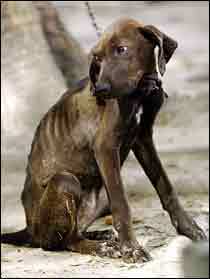
N.C. Gov. Bev Perdue must decide whether to sign new legislation into law after the N.C. Senate voted 47-0 to give final approval for new laws imposing stiffer penalties for those so violent that they would torture, starve, or kill an animal.

The punishment could be up to eight months behind bars, but a judge could agree to community service instead.

The bill was introduced after a Greensboro man received probation after burning, beating and leaving his 8-week-old puppy to die.

The female pit-bull mix was later             adopted and named Susie.

via Senate OKs stronger law for animal abuse.


Update: On June 23, 2010,  Governor Be Perdue signed Susie’s Law, making tougher penalties for those who abuse animals.


Graduated Driver’s Licensing Programs Reduce Fatal Crashes

Tags

, , , ,

According to a recent study by John Hopkins, graduated driver’s licensing programs reduce fatal crashes by 11% among 16-year-old drivers. All states except North Dakota have some form of graduated licensing requirements.

Learner Stage Intermediate Stage Full Privilege
Min. Age
(Yrs./Mos.)
Required
Supervised
Driving Hours
(Night Hours)
Min. Age
(Yrs./ Mos.)
Min. Dura-
tion
(Mos.)
Min. Age
(Yrs./Mos.)
Nighttime Driving Restriction Passenger
Restriction*
(* family members exempt)
NorthCarolina 15 12 16 9 p.m. – 5 a.m. No more than 1 pass. <21*;if family member <21 is passenger,

no other non-family memb. pass. <21

16 / 6 None

In addition, it is against the law in N.C. for all drivers to text while driving and it’s against the law for those under 18 to use a cell phone while driving. For more information on your state laws see

http://www.ghsa.org/html/stateinfo/laws/license_laws.html

It’s an Election Year. Do You Know Your Judges?

Tags

,

Credit: Shutterstock

Four candidates remain in the election for North Carolina Court of Appeals Judge: incumbent Judge Rick Elmore, incumbent Judge Ann Marie Calabria, state Supreme Court law clerk Steven Walker, and Wake District Court Judge Jane Gray.

If you aren’t an attorney you probably have little or no reason to know who these people are and even some attorneys may not be familiar with the candidates.

Judge Rick Elmore has served on the N.C. Court of Appeals since 2002. He is endorsed by the North Carolina Association of Defense Attorneys, the Winston-Salem Journal, and the Charlotte Observer. http://www.judgeelmore.com/index.htm

Judge Ann Marie Calabria has served on the N.C. Court of Appeals for 8 years. Antonin Scalia is her favorite Judge and her personal hero is former President Ronald Reagan. http://www.calabria4judge.com/index.html

Steven Walker has been a law clerk for the N.C. Supreme Court for the last 5 years. Steven is a N.C. native and a staunch conservative. http://walkerforcoa.com/

Judge Jane Gray has been a Wake County District Court Judge since 2002. She is endorsed by the N.C. Association of Women Attorneys, the Charlotte Observer, and the N.C. Advocates for Justice. http://www.judgejanegray.com/index.asp

The election is Tuesday, November 2, 2010. Please take a moment to learn about the candidates and vote!

Who’s Behind HB 813?

Tags

, , , , ,

You might be surprised to learn who is behind the push to move North Carolina from a contributory negligence state to a comparative negligence state. It’s attorneys! Primary sponsors of the House Bill are Rick Glazier, an attorney from Cumberland County, John Blust, an attorney/accountant from Guilford County, Deborah Ross, an attorney from Wake County, and Bonner Stiller, an attorney from Brunswick County.

Ever Tell a Dirty Joke at Work? (via Tomlarsen’s Weblog)

Gretchen by Marc Johns at http://draw.vox.com/

Many people and businesses don’t know what is covered under their insurance policy. If you are one of the these people you need to sit down with your insurance policy and actually read it. You might be surprised to find that you company may not be covered in a sexual harassment law suit.

Who has not repeated or told a dirty joke at work? It happens all the time from employee to employee and from supervisor to employee. Truth be told, this is really a form of sexual harassment and could cause a huge problem for an employer. The problem for an employer is, your business liability policy covers you for injury other’s occur due to your work and/or negligence. It does NOT cover you for harassment, discrimination, hostile workplace or … Read More

via Tomlarsen’s Weblog

Can a Person Accept a Settlement Offer After the Statute of Limitations has Run?

Tags

, , , , , ,

A settlement agreement is really a contract and a contract requires three things to make it complete: an offer, acceptance of that offer, andconsideration.

In contract law, the question of whether acceptance of an offer is within a reasonable time where no time for acceptance is specified is generally a question of fact for the fact finder given the surrounding circumstances. What is reasonable depends on the need or lack thereof for timely acceptance, what the parties believed to be the time frame for acceptance, and the expiration of the need for the offeree to perform the act required by the offeror.

In the case of a settlement contract, the consideration is generally thought of as forbearance to bring a suit or the forbearance to appeal a less than favorable verdict depending on the party that is making the offer. Once the statute of limitations has run there is no longer a need for the offeree to perform on an offer from the insurance company, because the insurance company no longer needs the offeree to forbear in bringing a suit or release the insurance company of any claims. There is no longer consideration for the contract. Therefore, a settlement contract cannot be formed after the statute of limitations has run.

In Smith and N.C. Farm Bureau v. Murrell and Progressive Insurance, 167 N.C. App. 655 (2004), the court held that Farm Bureau’s acceptance of Progressive’s offer to settle after the statute of limitations had run was not acceptance within a reasonable time because the release included in Progressive’s offer was no longer meaningful.

However, if the offeror mislead the offeree to believe that the offer would remain open past the statute of limitations then the court could find that a contract existed based on an equitable estoppel argument. Simply making an offer to settle and leaving the offer open should not create an equitable estoppel argument because equitable estoppel is based on the giving of misinformation or deceit.

Being as specific as possible about how long the offer to settle is on the table and when and how acceptance is to be made may be the best way to avoid the possibility of a person coming back after the statute of limitations has run and expecting to still be able to accept an offer to settle.

What happens when someone other than the named insured is driving the insured’s car and has an accident?

Tags

, , , , , , , ,

INSURANCE COVERAGE

In North Carolina, the insurance contract controls whether insurance coverage exists. There are several variations in insurance policies that are directly bearing on the question of coverage in this type of situation. In order to determine whether there could be coverage a determination needs to be made as to whether the insurance policy contains “Any Person”, “Reasonable Belief” or “Permissive Use” language and whether the person driving the car (tortfeasor) was in “lawful Possession” of the vehicle.

“ANY PERSON”

Some insurance policies define the insured as “any person using your “covered auto”.  This provision provides coverage to anyone using your car. It has no limiting language, so presumably even someone who has stolen the insured’s car would be an insured and the insurance company would likely have to provide coverage to that person.

“REASONABLE BELIEF”

The analysis used to determine whether the tortfeasor had “Lawful Possession” or “Reasonable Belief” that he could use the vehicle when the accident occurred is almost identical. In Nationwide Mut. Ins. Co. v. Baer, 113 N.C. App. 517, 520 (1994), the court held that the “Reasonable Belief” exclusion included in the Nationwide insurance policy was not in conflict with the N.C. Financial Responsibility Act. The court reasoned that the exclusion requiring a person have a reasonable belief that he was entitled to use the vehicle was simply another way of determining whether a person knows that he lacks the owner’s permission to use the vehicle. In previous cases, the court had concluded that the exclusion broadens the inquiry into whether the tortfeasor had a subjective, reasonable belief that he was entitled to use the vehicle.

“PERMISSIVE USE”

However, some insurance policies particularly corporate policies contain a “Permissive Use” clause. These types of policies usually extend coverage to “any person while using the insured auto with the permission of the named insured provided his actual operation is within the scope of such permission”.

If the insurance policy in question contains the “Permissive Use” clause, the analysis of coverage is as follows:

  • First, did the insured grant permission for the tortfeasor to use the vehicle?  The permission can be either express or implied. If not there may not be coverage.
  • Secondly, did the tortfeasor exceed the scope of the permission granted? The scope of the permission can be limited temporarily, geographically, and to limited purposes. N.C. courts follow the minor deviation rule, which provides that if the use of the vehicle by the permittee is not a gross deviation of the terms then coverage will apply.

“LAWFUL POSSESSION”

The N.C. Financial Responsibility Act requires that the policy provide minimum coverage if the tortfeasor is in “Lawful Possession” of the vehicle. “Lawful Possession” basically means that the tortfeasor did not steal the vehicle. Most insurance policies do not include language regarding “Lawful Possession” however this does not prevent the insurance company from having to provide coverage if the tortfeasor was in “Lawful Possession” of the vehicle at the time of the accident. The statute will control in situations where the language of the statute and the language of the insurance policy are in conflict with each other.

CONCLUSION

Coverage analysis should begin with the insurance policy. If the policy contains “Any Person” language, there is almost certainly coverage regardless of the reason why the tortfeasor had possession of the vehicle. If the policy contains the “Reasonable Belief” language, the analysis is one-step. Did the tortfeasor have a “Reasonable Belief” that he was entitled to use the vehicle? If the answer is yes then he is likely entitled to full coverage. If the answer is no, he probably not entitled to any coverage.

If the insurance policy has a provision, regarding “Permissive Use” the coverage determination hinges on whether the individual had permission from the insured to use the vehicle and that he did not exceed the scope of that permission. If both of these elements are met, then the policy will likely provide coverage. If the individual did not have permission to the use the vehicle, you then must look the N.C. Financial Responsibility Act to determine if the individual was in “Lawful Possession” of the vehicle and therefore entitled to minimum limits coverage. For these types of analyses, you should also consult an attorney specifically one familiar with insurance law, insurance defense, and insurance coverage.

Ship Management Firm Fined $850,000 for Illegally Dumping Waste in Violation of the Act to Prevent Pollution from Ships (APPS)

Tags

, , ,

In a recent decision, Judge Dever III for the Eastern District of N.C. fined Cooperative Success Maritime S.A. $850,000 for illegally dumping waste into the ocean during its transatlantic voyages. The company will also have to pay $150,000 to the Fish and Wildlife Fund.

WASHINGTON—Cooperative Success Maritime S.A., the operator of the M/T Chem Faros, a 21,145 gross-ton ocean-going cargo ship that regularly transported cargo between foreign ports and the United States, pleaded guilty and was sentenced today in federal court for violating the Act to Prevent Pollution from Ships (APPS), and to making material false statements, the Justice Department announced. U.S. District Court Judge James C. Dever III for the Ea … Read More

via USA CONFIDENTIAL

Design a site like this with WordPress.com
Get started